
Research News and Stories
Explore the latest news, stories, and groundbreaking research happening at the Institute of Biomedical Engineering. Stay updated on innovative projects, impactful discoveries, and the achievements of our talented students, faculty, and alumni shaping the future of biomedical science and engineering.
Quick Navigation
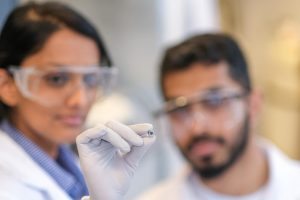
IBBME researchers develop pill-sized heating device for diagnostic testing
IBBME researchers develop pill-sized heating device for diagnostic testing
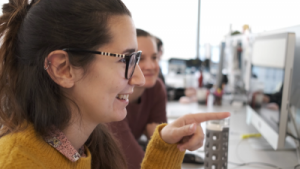
Rodrigo-Fernandez Gonzalez Lab
Dr. Rodrigo Fernandez-Gonzalez is interested in understanding how cells coordinate with one another during wound repair and embryogenesis.
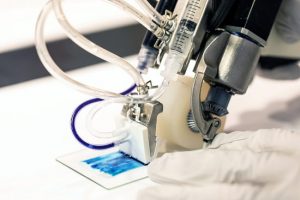
Handheld 3D skin printer demonstrates accelerated healing of large, severe burns
A new handheld 3D printer can deposit sheets of skin to cover large burn wounds – and its “bio ink” can accelerate the healing process.
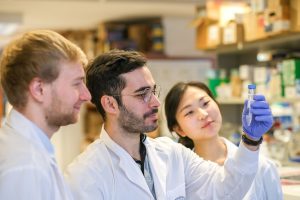
Researchers develop method to improve artificial islet transplantation success rate
Researchers from IBBME developed a method to improve the transplantation success rate of artificial islets.
Most Engineered Nanoparticles Enter Tumours Through Cells, Not Between them, U of T Researchers Find
University of Toronto researchers have discovered that an active rather than passive process dictates which nanoparticles enter solid tumours, upending decades of thinking in the field of cancer nanomedicine and pointing toward more effective nanotherapies.
Margaret Cheng Lab
Dr. Hai-Ling Margaret Cheng is developing cell and tissue scaffold tracking contrast agents to visualize how they are moving in the body.
Cancer Cartographers
Imagine being dropped off at the edge of an urban city with crisscrossing streets and no navigational instructions. The roads often run into dead-ends and are full of pot-holes, the network reception is non-existent, and the buildings aren’t numbered. If you want to get from the edge of the city into the downtown core, the only logical way is to map out your own route.

Non-invasive Biosurveillance
Dr. Hai-Ling Margaret Cheng is an IBBME/ECE faculty member at the Ted Rogers Centre for Heart Research.
Walking Manual
When Dr. Jan Andrysek was a master’s student at Holland Bloorview Hospital in 1998, he was already working alongside rehabilitation engineers and clinicians to develop solutions to help kids walk.
Tiny filters help detect cancerous blood cells
A computer model is used to guide the design of tiny pillars in a microfluidic device used to detect malignant multiple myeloma cells
Fall Convocation 2019: Three graduating students share their one-minute thesis
U of T engineering have chatted with Locke Davenport Huyer (ChemE, IBBME PhD 1T9) about his research topic in graduate school.
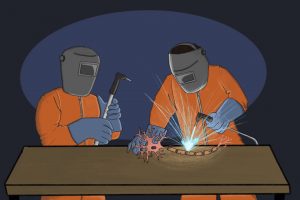
Engineering the brain: the promise of neural engineering in medicine
In conversation with Dr. José Zariffa on how the field could address conditions from Alzheimer’s disease to vision loss.
Jan Andrysek Lab
Dr. Jan Andrysek’s lab is dedicated to help amputees to regain movement in their lower limbs.
Dr. Molly Shoichet – Order of Canada
Dr. Molly Shoichet received the Order of Canada at the end of 2017
Dr. Michael Sefton – Order of Canada
Dr. Michael Sefton received the Order of Canada at the end of 2017.
Dr. Tom Chau – Order of Ontario
Dr. Tom Chau received the Order of Ontario in 2018.
Dr. Geoff Fernie – Order of Canada
Dr. Geoff Fernie received the Order of Canada at the end of 2017
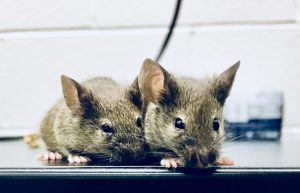
A diabetes drug promotes brain repair — but it only works in females, U of T study shows
Accounting for sex differences could be key for the development of better treatments as drug shows promise for brain repair in females only.
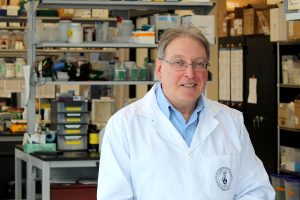
This U of T Engineering innovation makes implants safer, and is attracting new investment to Toronto
Global chemical company Evonik will maintain presence in Toronto after acquiring part of U of T spinoff Interface Biologics, Inc.
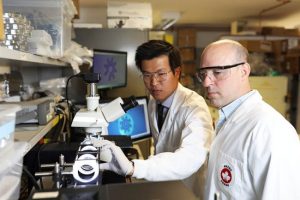
Microrobots to change the way we work with cellular material
In a new study published in the Proceedings of the National Academy of Sciences, researchers in the lab of Professor Aaron Wheeler have demonstrated a novel and non-invasive way to manipulate cells through microrobotics.
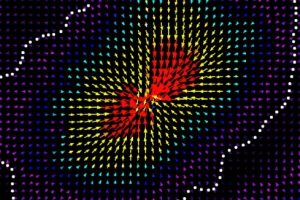
New study suggests alternate mechanism during wound repair
Macrophages may respond to mechanical signals sent out by fibroblasts during wound repair.
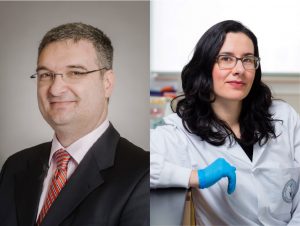
Five U of T Engineering professors and alumni receive Ontario Professional Engineers Awards
Five U of T Engineering professors and alumni have been honoured by the Ontario Society of Professional Engineers (OSPE) and Professional Engineers Ontario (PEO) with Ontario Professional Engineers Awards.
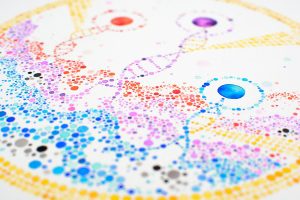
Not all stem cells are created equal
Cells known as “elite clones” appear to outcompete their neighbours in the process of becoming stem cells, shown in a research paper published in Science.
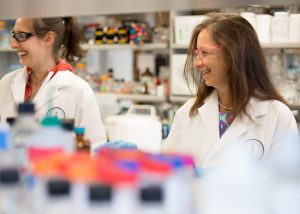
Artificial lung cancer tissue could help find new drug treatments
A 3D hydrogel created by researchers in University Professor Molly Shoichet’s lab is helping University of Ottawa researchers to quickly screen hundreds of potential drugs for their ability to fight highly invasive cancers.