CAMH are seeking a Postdoctoral Fellow to join their quantitative research team focusing on brain and mental health innovation.
The Focus: Applying AI/ML and signal processing to multimodal physiological data—including EEG, eye-tracking, ECG, and wearables—to develop cutting-edge digital biomarkers.
The Ideal Candidate:
- PhD in Biomedical Engineering, Computer Science, Data Science, or Computational Neuroscience.
- Strong interest in the intersection of AI and mental health.
Join GMCA’s Master the Case Interview Series (MCIS), an interactive virtual workshop series designed to prepare graduate trainees (MSc, PhDs, Post-Docs, PharmDs, MDs, and JDs) for the 2026 full-time consultant recruitment cycle or 2027 internship recruitment cycle.
This training program consists of 8-10 sessions where trainees will work through a case interview alongside experienced consultants from top firms. These sessions aim to help students understand: (1) how to crack a case, (2) firm-specific case interview styles, and (3) industry-specific knowledge.
Learn More: here
MCIS Application Form: here
Application Deadline: Wednesday,April 22nd, 2026 (5:00 PM ET)
If you have any questions about this event, please do not hesitate to contact us at info@gmcacanada.com. If you’re interested in receiving updates on upcoming GMCA events, gaining exclusive access to job postings from our partnering management consulting firms, and staying up to date with highlights from our previous events, subscribeto our GMCA monthly newsletter.
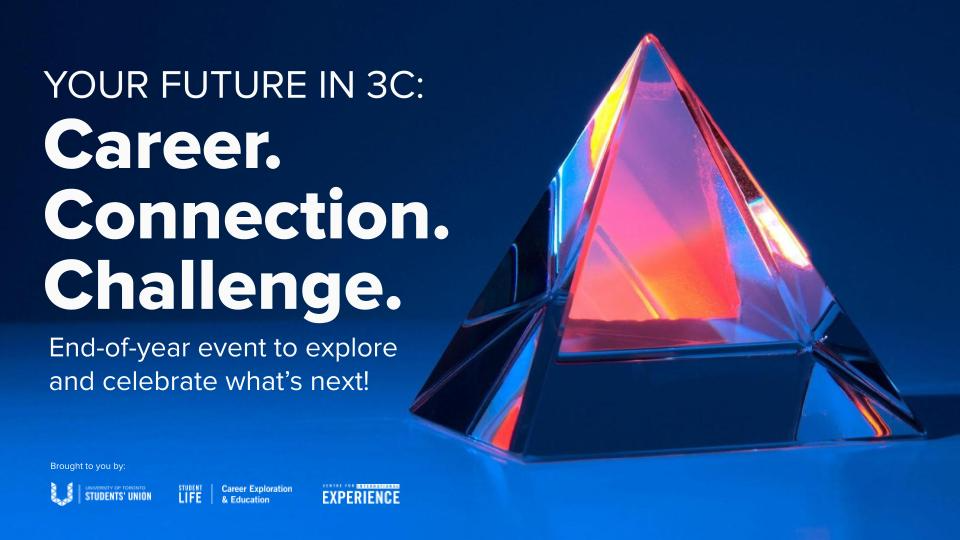
UTSU, CIE, CxED & Student Life present Your Future in 3C! Connect with alumni, explore careers, enjoy food, mocktails & headshots.
Join the UTSU, CIE, CxED, and Student Life on Monday, April 27, 10-4pm at the Student Commons (230 College) for Your Future in 3C: Career, Connection, Challenge.
This is the year-end event to explore and celebrate what’s next! Hear from alumni, ask them your burning questions, and workshop on envisioning your future while understanding how to use AI in your job search. International students will enjoy sessions on navigating their job search in context. You’ll even get the chance to have your headshot taken! Enjoy a light breakfast, lunch, and a social celebration with delicious mocktails. Don’t miss this opportunity to network, learn, and celebrate as you prepare for your next chapter!
This event is for University of Toronto Students and recent graduates, please ensure you register with your U of T email to secure your Eventbrite ticket.
What does your ticket get you? Entry into each of the following events:
Event Agenda
Caffeinate & Connect: Rub elbows with alumni, peers, learn about career services, and enjoy a great cup of coffee and a light breakfast.
Keynote Address: By UofT alumnus Adrian Leckie, focused on the transitional space of early career, and its uncertainty, difficulty – and moments to remember to celebrate – to inspire what’s next for your career and how it fits into your life.
Workshops by Career Exploration & Education at UofT Student Life:
- Navigating Job Searching as an International Student – An interactive session exploring how our intersecting identities shape our experiences and presence in the workplace through dialogue and shared reflection.
- Using AI in Career Exploration & Job Searching – A practical workshop on using AI tools effectively and responsibly to support career exploration, resumes, and interview preparation.
- Envisioning Your Future – An Art-Based Career Exploration Workshop – A creative, arts-based workshop that uses reflective writing and sculpture-making to help participants gain new insights into their ideal career paths.
Munch & Mingle: Enjoy a delicious buffet lunch while networking with alumni, peers, learn about career services
From Here to Career: How do you get from university to a career when you don’t have much experience, feel underemployed, or aren’t sure what “the next step” looks like? From Here to Career is a fast-paced, alumni-led session that brings real stories to the stage. Alumni speakers will share honest, relatable journeys-including navigating limited work experience, solutions to underemployment, and finding purpose and taking control through meaningful volunteer roles-before opening the floor to student questions.
Headshots: Sign up to get your professional headshot done! When registering, be sure to opt in to getting on the headshot schedule to confirm your spot. We will also be accommodating day of walk-in’s if you are unable to secure your spot!
Closing Remarks & Sip Happens: Here’s to what’s next! Enjoy a delicious mocktail and appetizer while Heather Kelly, ED, Student Life, reviews the day: the uncertainty, the hard questions, the wins, the big “what’s next?” moments, and the inspiring advice – and offering a reminder on how to celebrate the milestones, big and small.

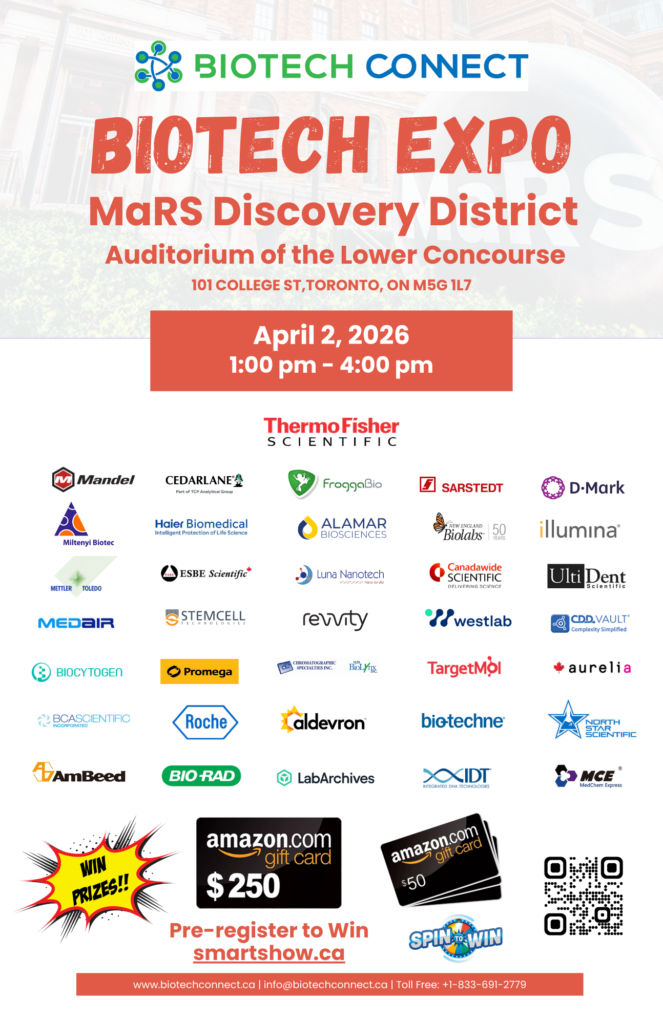
MaRS Discovery District
When? Thursday, April 2, 2026 @ 1:00 pm – 4:00 pm
Where? Auditorium of the Lower Concourse
Why visit?
- Discover recent innovations that can help you in the lab
- Meet your local sales specialist
- Sandwiches and coffee will be served!!
- 250$ gift card to win (must be registered)
Click here (www.SmartShow.ca) to register now and skip the registration line at the show
Now Open: Information Sessions for Prospective Schmidt Science Fellows
The Schmidt Science Fellows program is announcing two upcoming information sessions on March 23 and 24, 2026, designed for eligible STEM and Computing PhD students who are exploring the possibility of applying—either this year or in the future.
These sessions offer candidates an opportunity to learn more about the program’s mission, expectations, and application process.
Registration is now available:
https://events.schmidtsciencefellows.org/en/4K5MVoX7/g/ewDF7SNk21
Both sessions will feature the same content, allowing participants to select the date and time that best fits their schedules.
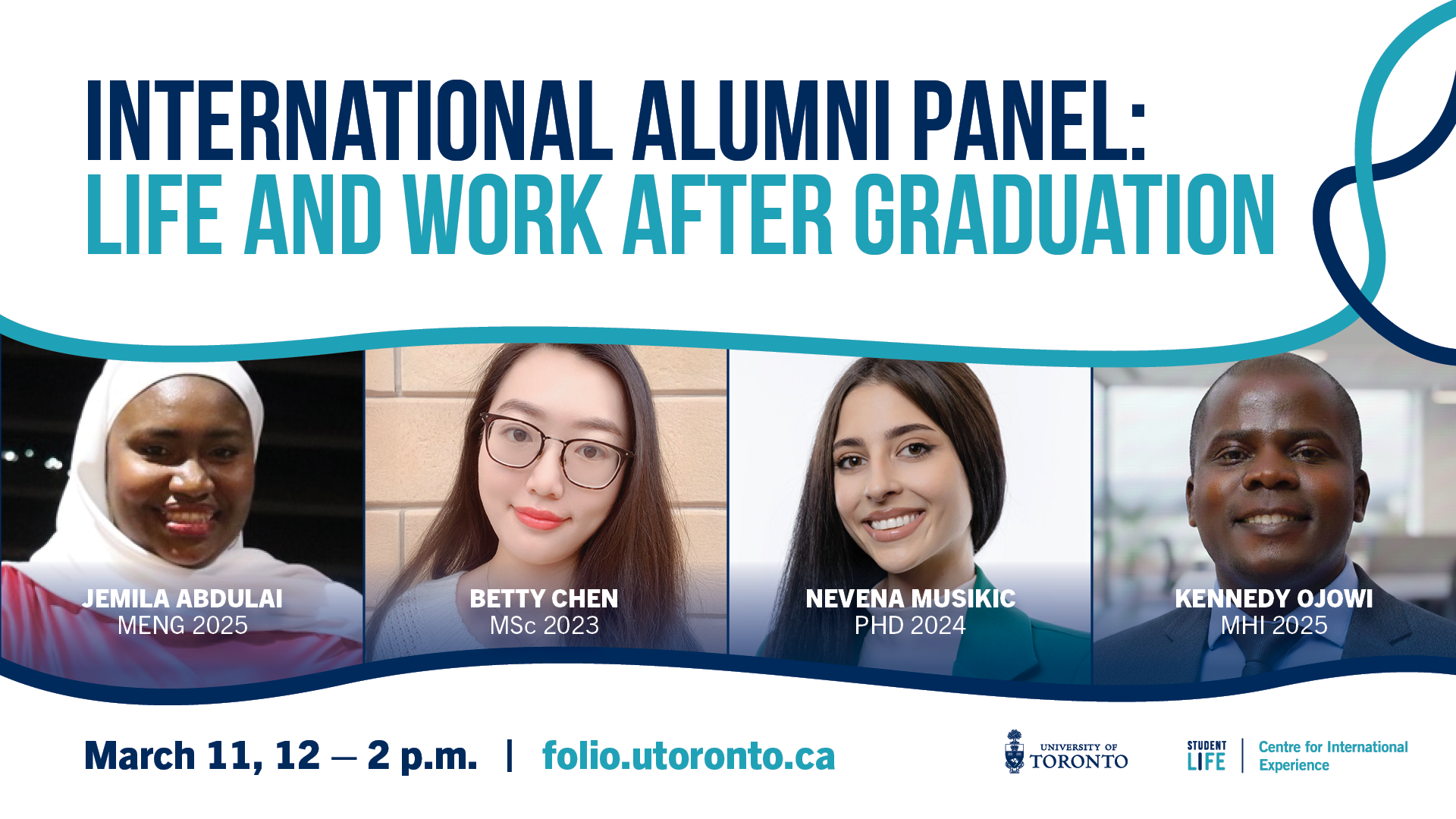
Are you looking to get into the fields of research (PhD), public health, biomedical engineering, STEM after graduation? Connect with young professionals from various geographical areas and gain insight in the fields of research (PhD), public health, biomedical engineering, STEM.
Check out the registration link for panellist bios.
Register on Folio (Hyperlink with Folio: https://folio.utoronto.ca/students/events/detail/6654736)
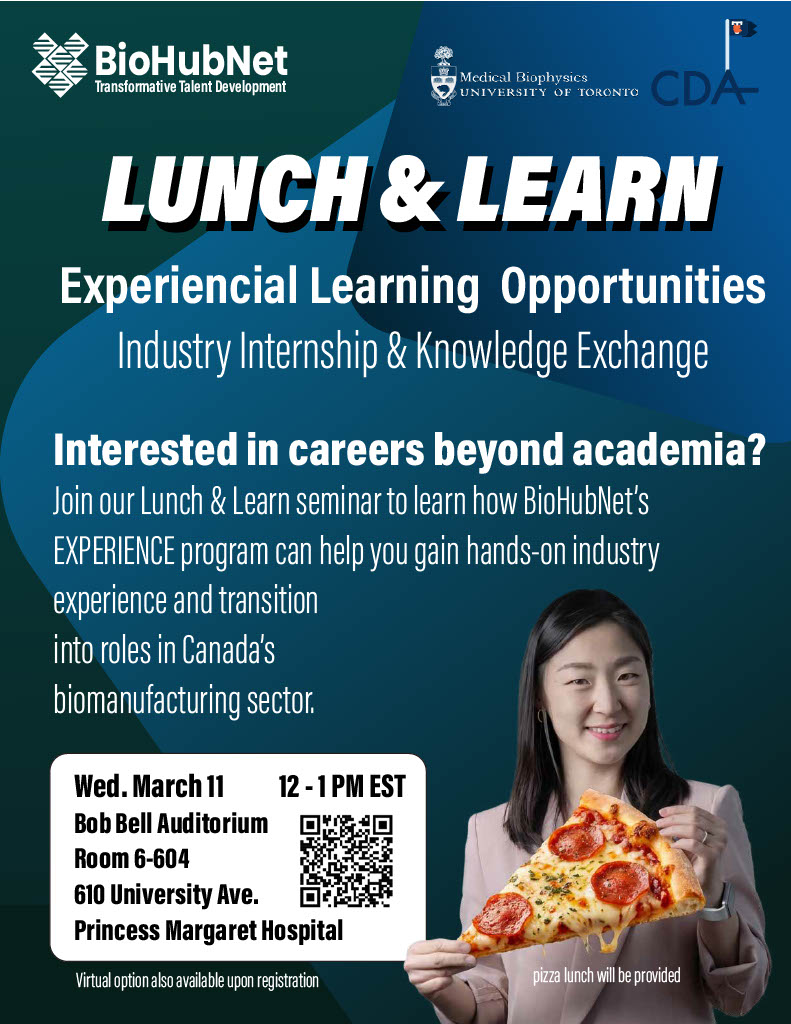
Interested in careers beyond academia? BioHubNet and the Medical Biophysics Career Development Association (MBPCDA) is excited to host a Lunch & Learn on March 11th, 12:00-1:00PM at the Bob Bell Auditorium Room 6-604, 610 University Ave. (Princess Margaret Hospital)
Join us for an impactful session to learn more about BioHubNet’s industry internships and bridging opportunities with the biomanufacturing and life sciences sector, and all their resources to help you navigate the process of gaining hands-on experience to kickstart your career. Registration is required to attend in-person or virtually here: https://luma.com/nw3vcvx4
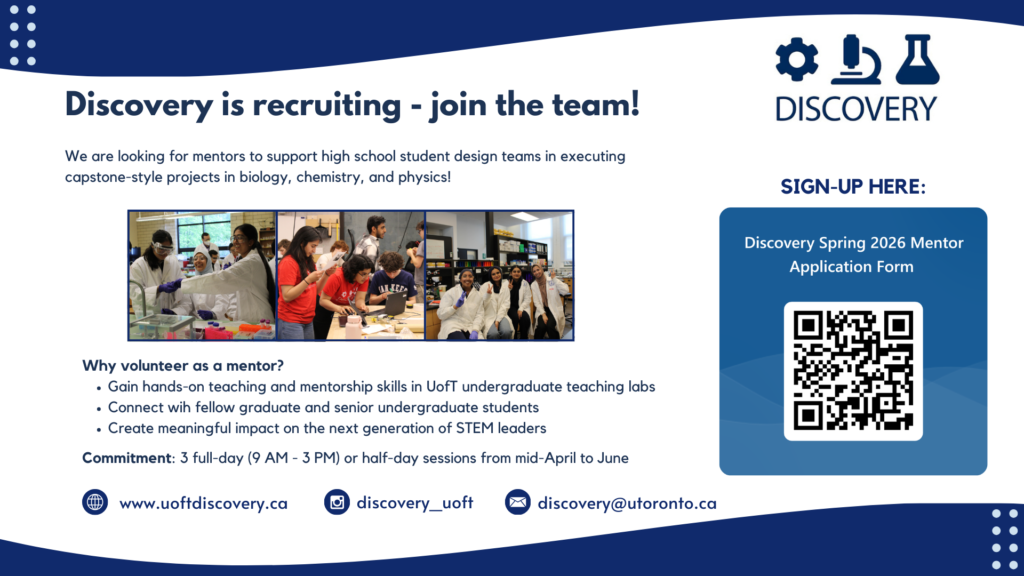
Interested in mentoring the next wave of scientists and improving high school STEM education? Get involved with the Discovery program this Spring!
The Discovery Program at the University of Toronto is seeking mentors for its upcoming Spring 2026 term (April 2026 – June 2026). This initiative targets high schools with fewer educational resources, offering students an opportunity to engage in university-level STEM projects. In partnership with high school educators from the Toronto District School Board, participating students work in teams to design and execute experiments to solve real-world problems over three full day visits to UofT. We are currently recruiting volunteer mentors to help guide high school students through their iterative designs. As a mentor, you’ll guide students through capstone projects in Biology, Chemistry, and Physics, helping them apply their knowledge in a hands-on, inquiry-based learning environment. You will also have the chance to gain skills and experience for future teaching opportunities, connect with fellow mentors in the Discovery community, and share your passion for science and engineering with students!
If you’re interested, sign up using this link: https://forms.office.com/r/XhRe5Awatg or scan the QR code on the image below. For more details, visit uoftdiscovery.ca or reach out via email to: discovery@utoronto.ca